Diyanet Journal

Diyanet Journal

Haziran-2026

Introduction

The human being is the most precious trust of our Exalted Lord; a distinguished creation endowed with dignity, honor, and rights. Indeed, in the Qur’an it is declared, “Indeed, We have dignified the children of Adam…” (Isra, 17:70), thereby drawing attention to the intrinsic worth with which humanity has been created. In this respect, the issue of human rights is not merely a legal debate, but a fundamental matter situated at the heart of a profound moral and civilizational vision. Islam, with its approach centered on the protection of human life, intellect, property, lineage, and faith, grounds rights and freedoms in a divine foundation and offers a comprehensive perspective that encompasses not only individual rights but also social order, justice, and humanity’s relationship with the entirety of existence. In the Qur’an, the verse, “whoever takes a life—unless as a punishment for murder or mischief in the land—it will be as if they killed all of humanity; and whoever saves a life, it will be as if they saved all of humanity…” (Maʾidah, 5:32), strikingly affirms the inviolability of the right to life.

The Prophet Muhammad (saw) set forth the finest example regarding human rights not only through his words but also through the practices he demonstrated throughout every stage of his life. In the Farewell Khutbah, he declared, “Your lives, your property, and your honor are inviolable to one another,” thereby proclaiming clearly and decisively the sanctity of fundamental human rights. This statement constitutes a universal principle that addresses not merely a particular time or community, but all of humanity. The warnings of the Prophet Muhammad aim to prevent violations of rights and to establish a social order grounded in justice and compassion. They also foster a sense of respect, responsibility, and fairness in human relations. In this way, the exemplary model he presented continues to serve as a timeless guide for the protection and preservation of human rights.

In this issue of Diyanet Journal, we present to you our featured theme, “Human Rights in Islam”. Prof. Dr. Saffet Sancaklı contributes to the agenda section with his article, “The Islamic Perspective on Human Rights”, while Associate Professor Dr. Bayram Koseoglu enriches our theme with his article, “Islam: The Religion of Tawhid, the Community of Wahdah”. Our interview guest, Prof. Dr. Recep Senturk, revisits the universality of human rights through the lens of Islamic principles and values, offering insightful evaluations on the crises confronting the modern world. We hope that this issue in your hands will contribute to a deeper understanding of Islam’s profound perspective on the question of human rights and serve as a means for us to reconsider our individual and societal responsibilities. We wish you a blessed and beneficial reading.

Gulhiman Hekimoglu


The Magnificent Balance In The Universe

The Magnificent Balance In The Universe

Mart-2026

Editorial

 The question of creation stands as one of the most fundamental inquiries at the heart of the relationship between humanity and existence. Throughout history, human beings have sought to comprehend the order of the universe they inhabit, the meaning of their own existence, and the wisdom that underlies it all. The Holy Qur’an invites the human being to this journey of contemplation and declares, “Indeed, in the creation of the heavens and the earth and the alternation of the day and night there are signs for people of reason.” (Al-i ‘Imran, 3:190). Thus, it reminds us that the order within the universe is a clear proof of divine power.

 The universe created by Allah the Almighty, who is the Creator and Sovereign of all existence, is at the same time a collection of signs pointing to His existence. Indeed, the Qur’an declares, “Travel throughout the land and see how He originated the creation…” (‘Ankabut, 29:20), thereby directing humankind toward observation, reflection, and contemplation. This divine call activates the human intellect, heart, and conscience, reminding the human being of the responsibility to comprehend the meaning of existence.

 In Islamic thought, one of the fundamental concepts in understanding creation is sunnatullah. The universe is neither abandoned nor purposeless; rather, everything continues its existence within the measure and laws determined by divine wisdom. In the Holy Qur’an, it is declared, “Indeed, We have created everything, perfectly preordained.” (Qamar, 54:49), clearly expressing this divine balance. In this respect, the realm of existence has been presented to human observation; thus, the universe has become a great book of contemplation that must be read.

 This perspective not only leads the human being to a sense of awe before the universe, but also calls him to responsibility. For the human being is entrusted with preserving balance upon the earth that has been given to him as a trust. This outlook, shaped under the guidance of the Qur’an, transforms the understanding of creation into more than a mere matter of knowledge; it becomes an inseparable part of faith and the consciousness of responsibility. In this issue of Diyanet Journal, we are pleased to present our special feature entitled “The Magnificent Balance in the Universe.” Prof. Dr. Soner Gunduzoz addresses our main theme in his article, “Existence from Chaos to Cosmos: What Qur’anic Knowledge Tells Us and the Possibility of a Theistic Science.” In the Muslims of the World section, Yasar Cuhadar discusses Ethiopia’s encounter with Islam and its historical journey. Our guest for this issue’s interview, Prof. Dr. Necdet Cagil, emphasizes that reflecting upon the unique order and harmony of the universe represents a form of worshipful consciousness that draws human beings closer to the Creator. We present this issue, featuring many esteemed articles and distinguished contributors, to you, our valued readers, and wish you an enjoyable and beneficial reading experience.

 Gulhiman HEKIMOGLU

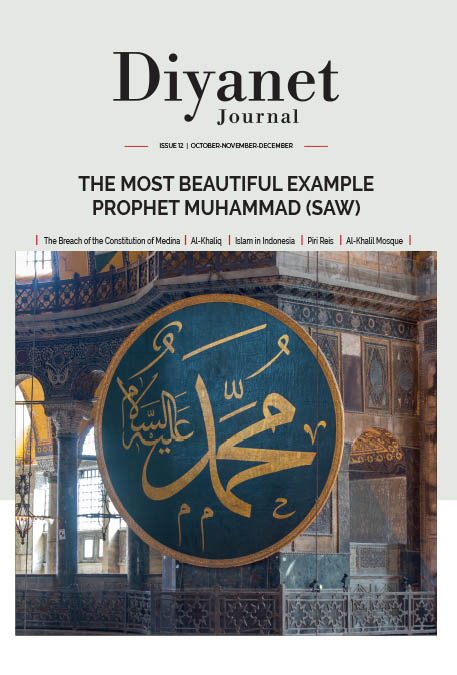
THE MOST BEAUTIFUL EXAMPLE PROPHET MUHAMMAD (SAW)

THE MOST BEAUTIFUL EXAMPLE PROPHET MUHAMMAD (SAW)

Aralık-2025

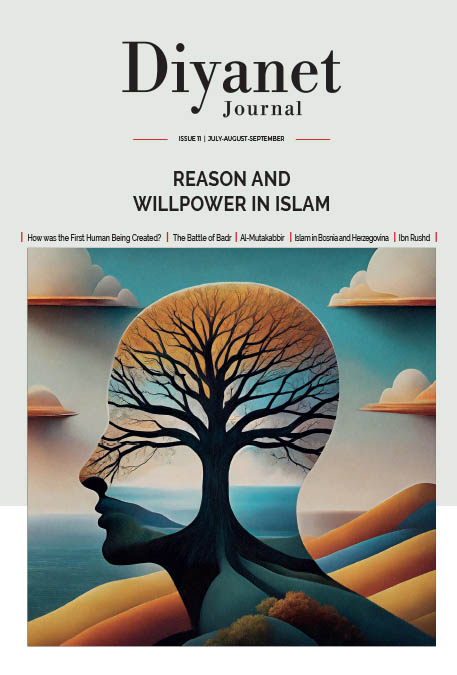
REASON AND WILLPOWER IN ISLAM

REASON AND WILLPOWER IN ISLAM

Kasım-2025

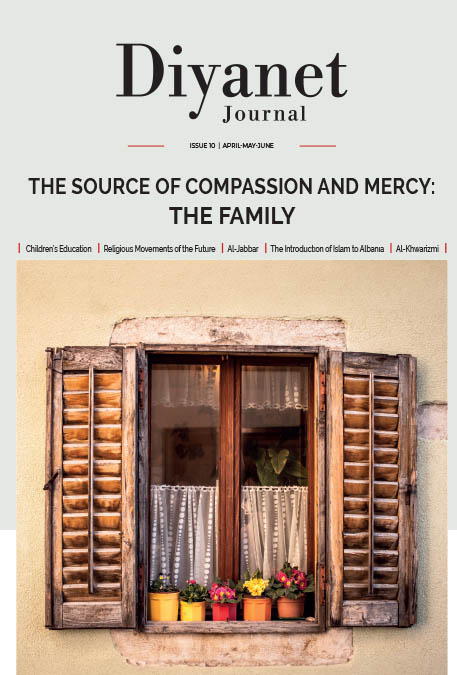
THE SOURCE OF COMPASSION AND MERCY: THE FAMILY

THE SOURCE OF COMPASSION AND MERCY: THE FAMILY

Haziran-2025

Diyanet Journal
The Magnificent Balance In The Universe
THE MOST BEAUTIFUL EXAMPLE PROPHET MUHAMMAD (SAW)
REASON AND WILLPOWER IN ISLAM
THE SOURCE OF COMPASSION AND MERCY: THE FAMILY
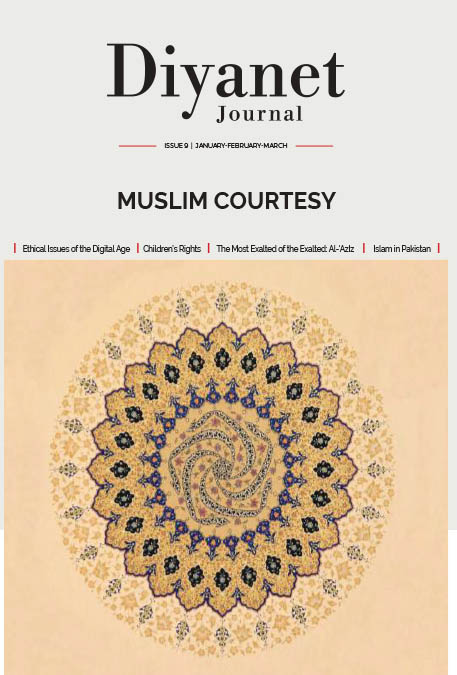
MUSLIM COURTESY
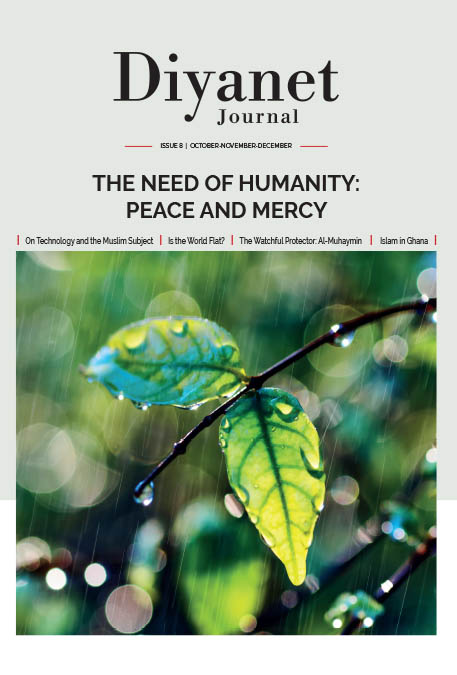
THE NEED OF HUMANITY: PEACE AND MERCY
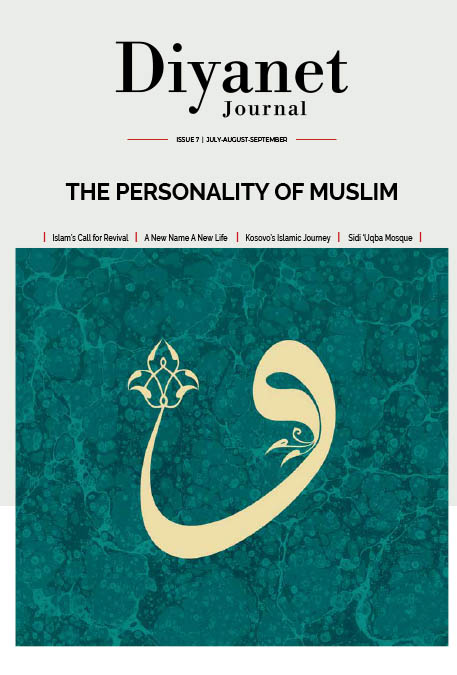
THE PERSONALITY OF MUSLIM
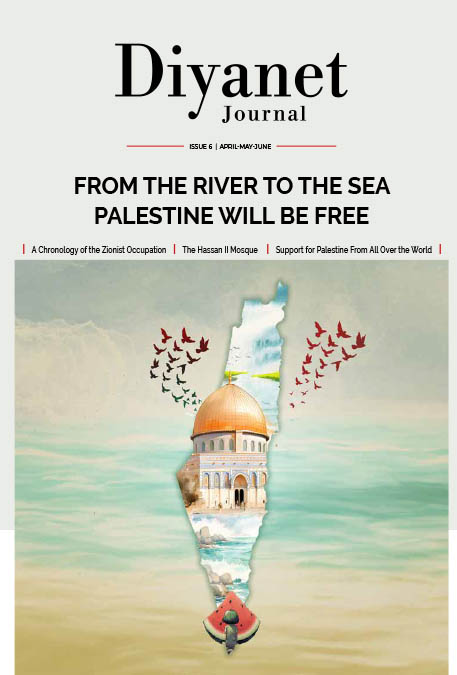
FROM THE RIVER TO THE SEA PALESTINE WILL BE FREE
LIVING IN THE CONTEMPORARY WORLD WITH OUR MUSLIM VALUES
WOMEN AND EDUCATION IN ISLAM
THE RIGHT TO LIFE
ISLAM AND THE ENVIRONMENT
GOODNESS WILL CHANGE THE WORLD