Introduction
The human being is the most precious trust of our Exalted Lord; a distinguished creation endowed with dignity, honor, and rights. Indeed, in the Qur’an it is declared, “Indeed, We have dignified the children of Adam…” (Isra, 17:70), thereby drawing attention to the intrinsic worth with which humanity has been created. In this respect, the issue of human rights is not merely a legal debate, but a fundamental matter situated at the heart of a profound moral and civilizational vision. Islam, with its approach centered on the protection of human life, intellect, property, lineage, and faith, grounds rights and freedoms in a divine foundation and offers a comprehensive perspective that encompasses not only individual rights but also social order, justice, and humanity’s relationship with the entirety of existence. In the Qur’an, the verse, “whoever takes a life—unless as a punishment for murder or mischief in the land—it will be as if they killed all of humanity; and whoever saves a life, it will be as if they saved all of humanity…” (Maʾidah, 5:32), strikingly affirms the inviolability of the right to life.
The Prophet Muhammad (saw) set forth the finest example regarding human rights not only through his words but also through the practices he demonstrated throughout every stage of his life. In the Farewell Khutbah, he declared, “Your lives, your property, and your honor are inviolable to one another,” thereby proclaiming clearly and decisively the sanctity of fundamental human rights. This statement constitutes a universal principle that addresses not merely a particular time or community, but all of humanity. The warnings of the Prophet Muhammad aim to prevent violations of rights and to establish a social order grounded in justice and compassion. They also foster a sense of respect, responsibility, and fairness in human relations. In this way, the exemplary model he presented continues to serve as a timeless guide for the protection and preservation of human rights.
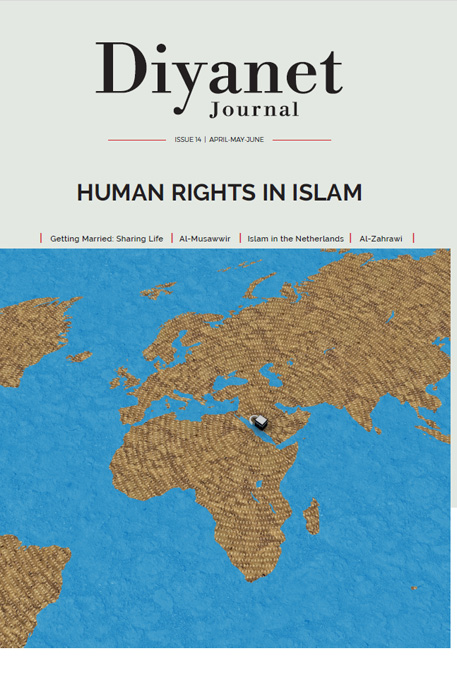
In this issue of Diyanet Journal, we present to you our featured theme, “Human Rights in Islam”. Prof. Dr. Saffet Sancaklı contributes to the agenda section with his article, “The Islamic Perspective on Human Rights”, while Associate Professor Dr. Bayram Koseoglu enriches our theme with his article, “Islam: The Religion of Tawhid, the Community of Wahdah”. Our interview guest, Prof. Dr. Recep Senturk, revisits the universality of human rights through the lens of Islamic principles and values, offering insightful evaluations on the crises confronting the modern world. We hope that this issue in your hands will contribute to a deeper understanding of Islam’s profound perspective on the question of human rights and serve as a means for us to reconsider our individual and societal responsibilities. We wish you a blessed and beneficial reading.
Gulhiman Hekimoglu